
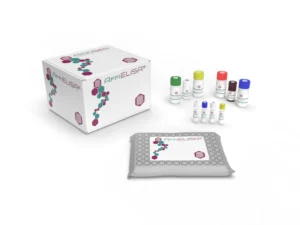
Human Prokineticin-1 is a signaling protein that plays a critical role in various physiological processes, including angiogenesis, inflammation, and neuronal activity. Measuring the levels of Prokineticin-1 in biological samples can provide valuable insights into conditions such as cardiovascular diseases, cancer, and reproductive disorders. The Human Prokineticin-1 ELISA is a highly specific and sensitive assay designed to quantify Prokineticin-1 levels in human samples, such as serum, plasma, or tissue lysates.

Assay Principle
The Human Prokineticin-1 ELISA operates on the sandwich ELISA principle, which is commonly used for the detection of soluble antigens in biological fluids. The basic steps include:
- Capture Antibody: A monoclonal antibody specific to Prokineticin-1 is coated on the microplate.
- Sample Addition: The sample containing Prokineticin-1 is added to the wells, allowing the antigen to bind to the capture antibody.
- Detection Antibody: A second antibody conjugated to an enzyme (usually HRP or alkaline phosphatase) is introduced, forming a sandwich complex with the captured Prokineticin-1.
- Substrate Addition: A chromogenic substrate is added, which the enzyme converts into a measurable color signal. The intensity of the signal is directly proportional to the Prokineticin-1 concentration in the sample.
For an in-depth understanding of the sandwich ELISA method, visit nih.gov or ncbi.nlm.nih.gov.

Applications
The Human Prokineticin-1 ELISA is utilized in a wide range of research areas, including:
- Cardiovascular Research: Elevated levels of Prokineticin-1 have been implicated in conditions like myocardial ischemia and heart failure. Studies available on PubMed (pubmed.gov) have shown that Prokineticin-1 acts as a potent angiogenic factor in cardiac tissues.
- Oncology: Research has demonstrated that Prokineticin-1 is involved in the progression of certain cancers, particularly through its role in tumor angiogenesis. The National Cancer Institute (cancer.gov) offers extensive resources on the involvement of angiogenic factors in tumor growth and metastasis.
- Reproductive Health: Prokineticin-1 is crucial in the regulation of uterine function and has been studied in the context of endometrial receptivity and embryo implantation. The National Institutes of Health (NIH) (nih.gov) provides detailed research on the role of cytokines and growth factors in reproductive biology.
- Neurological Studies: Prokineticin-1 has neuroprotective properties and is involved in the regulation of neuronal survival and inflammatory responses in the brain. Studies funded by NINDS (ninds.nih.gov) explore its role in neuroinflammatory conditions and neurodegenerative diseases.
Assay Performance
The Human Prokineticin-1 ELISA is designed for high sensitivity and specificity. Typical assay characteristics include:
- Sensitivity: Detection limit in the low pg/mL range.
- Range: 15.6 – 1,000 pg/mL.
- Precision: Intra-assay and inter-assay CVs are usually <10%.
- Specificity: No cross-reactivity with other closely related proteins.
Detailed guidelines on assay optimization and troubleshooting can be found through resources at FDA.gov (fda.gov) and Johns Hopkins University (hopkinsmedicine.org).
Sample Collection and Preparation
For accurate results, it is important to follow the correct sample collection and preparation methods:
- Serum/Plasma: Samples should be collected using standard venipuncture techniques and immediately processed to avoid protein degradation.
- Tissue Lysates: Samples need to be homogenized and lysed in the presence of protease inhibitors to ensure the stability of Prokineticin-1.
Further sample handling procedures are available from the Centers for Disease Control and Prevention (CDC) at cdc.gov.
Conclusion
The Human Prokineticin-1 ELISA is a valuable tool in biomedical research, offering reliable and reproducible results for quantifying Prokineticin-1 in biological samples. Its applications in cardiovascular, oncology, reproductive, and neurological studies make it indispensable in advancing our understanding of various diseases.
For additional technical resources, visit Stanford University (stanford.edu) or explore related studies at Yale University (yale.edu).